
- Duration
- 6D / 5N
- Max altitude
- 12,250 ft
- Difficulty
- Easy–Moderate
- Best months
- Jan, Feb, Mar, Apr, Dec
- Starts from
- Kathgodam
- Stay
- Homestay, Tents
- Group size
- 1-20
Overview
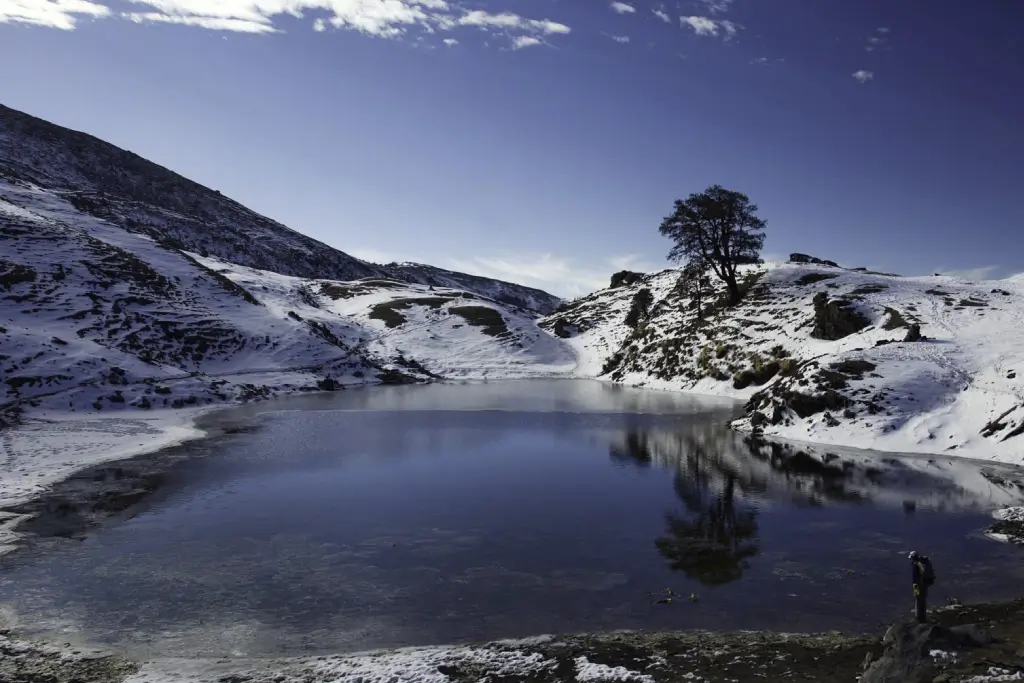
Picture walking through a forest draped in fresh snow, the only sounds around you being your own footsteps and the occasional call of a Himalayan bird. That's Brahmatal on a winter morning. Located in the Chamoli district of Uttarakhand's Garhwal Himalayas, this trek starts from the quiet village of Lohajung and climbs through oak and rhododendron forests, past two serene alpine lakes — Bekaltal and Brahmatal — before topping out at a ridge where Mt. Trishul and Mt. Nanda Ghunti feel almost close enough to touch.
What makes Brahmatal special is its accessibility without compromise. It's one of the very few treks that stays open through winter, welcomes first-timers, and still delivers a genuine high-Himalayan experience — frozen lakes, thick snowfields, and panoramic peak views from the summit. Whether you're doing your first Himalayan trek or adding a quality winter adventure to your list, Brahmatal consistently delivers more than it promises.
Highlights
- Two Frozen Alpine Lakes — Bekaltal and Brahmatal both freeze over in winter, creating mirror-like icy surfaces surrounded by snow-dusted forests. The photography here is unreal.
- Unbeatable Views of Mt. Trishul & Nanda Ghunti — From Jhandi Top and the summit, these giants fill the horizon in a way that makes you stop mid-step and just stare.
- Perfect for First-Time Winter Trekkers — The trail is well-graded, the altitude gain is manageable, and the experience is 100% Himalayan. It's a first-timer's dream done right.
- Lord Brahma's Meditation Lake — According to local mythology, Lord Brahma himself meditated at Brahmatal Lake. That sense of ancient quiet is very real when you're standing there.
- Open All Winter When Most Treks Are Closed — While other Himalayan trails shut down from December to February, Brahmatal is in its prime — snow-covered, magical, and open for business.
Day by day
D1 Dehradun to Lohajung
D2 Lohajung to Gujreni
D3 Gujreni to Bekaltal
D4 Bekaltal to Brahmatal via Tilandi Top & Jhandi Top
D5 Brahmatal Summit & Descent to Daldam
D6 Daldam to Lohajung, Drive to Dehradun
What’s included
- Accommodation throughout (twin-sharing tents on trail, guesthouse at Lohajung on Day 1)
- All meals from Day 1 dinner to Day 6 dinner (vegetarian + eggs)
- Experienced, certified trek leader
- Support staff and porters for common/camp equipment
- Camping gear (tents, sleeping bags, sleeping liner, mattress)
- All required trek permits and forest entry fees
- First aid kit, pulse oximeter, emergency oxygen cylinder
- Transport: Dehradun to Dehradun (pickup and drop)
- Travel to/from Dehradun
- Personal trekking gear (boots, trekking poles, gloves, gaiters, etc.)
- Bag offloading charges (₹400 per bag per day, paid directly at Lohajung)
- Personal travel insurance (strongly recommended for winter treks)
- Meals during drive on Day 1 and Day 6
- Personal medicines and toiletries
- Tips for guides and support staff
- Any extra services not listed under Cost Includes
Good to know
Brahmatal is a 6-day trek covering approximately 28 km, starting and ending from Lohajung (2,270 m) in the Chamoli district of Uttarakhand. The highest point is Brahmatal Top at around 3,734 m (12,250 ft). Difficulty is rated easy to moderate, making it genuinely accessible for beginners — though the summit day in heavy snow does demand solid stamina. The altitude gain per day is well-paced, which means AMS (altitude sickness) is far less of a concern here than on more aggressive Himalayan treks. That combination of accessibility, safety, and genuine mountain beauty is exactly why Brahmatal has become one of India's most popular winter treks in recent years.
Brahmatal is a trek with multiple personalities depending on when you go. In December through February, the entire trail is buried under snow — the forests look like something out of a snow globe, Bekaltal and Brahmatal lakes freeze solid, and the summit offers a clean white panorama with every major peak in sharp relief. In March and April, snow begins to melt, rhododendrons burst into red and pink along the trail, and the meadows turn green almost overnight — it's a completely different experience that's equally beautiful. October and November offer post-monsoon clarity — crisp air, golden oak forests, and unobstructed peak views. Avoid July and August entirely; the trail gets slippery and landslide-prone during monsoon.
What truly sets Brahmatal apart from other winter treks in its difficulty range is the two-lake experience. Most treks have one headline moment. Brahmatal gives you Bekaltal on Day 3 — quiet, dark, and eerily beautiful in the forest. Then it gives you Brahmatal itself on Day 4 — open, sacred, and backed by a wall of Himalayan peaks. The visual and emotional contrast between the two makes the trek feel longer and richer than its five trekking days suggest. Add in the mythology of Lord Brahma's meditation, the birdlife in the Gujreni forests, and the jaw-dropping 180-degree panorama from Jhandi Top, and Brahmatal becomes far more than just a beginner winter trek — it's a full Himalayan experience compressed into a perfectly sized package
Questions
Is Brahmatal trek good for beginners?
What is the best time to do the Brahmatal trek?
How much does the Brahmatal trek cost in 2025–26?
What gear do I need for the Brahmatal trek in winter?
How do I reach Lohajung, the Brahmatal trek base?
Trekker reviews
What the batch said
No reviews yet — write the first one.
Been on this trek? Tell the next batch.
Anyone can write one, with photographs. We read every review before it goes up, so give it a day.