
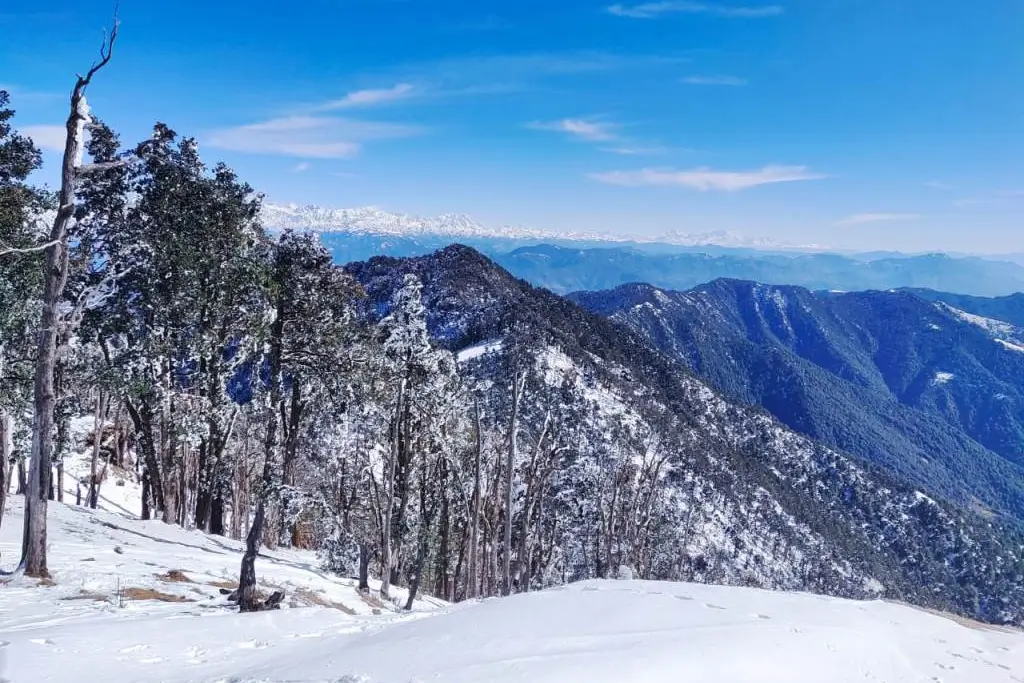
- Duration
- 2D / 0N
- Max altitude
- 9,915 ft
- Difficulty
- Easy
- Best months
- Jan, Feb, Mar, Apr, May, Jun, Oct, Nov, Dec
- Starts from
- Dehradun
- Stay
- Homestay, Tents
- Group size
- 1-20
Overview
Not every great trek needs a week off and a plane ticket. Nag Tibba — the Serpent's Peak — proves that a single weekend is more than enough to feel genuinely Himalayan. Located just 90 km from Dehradun in the Garhwal hills of Uttarakhand, this two-day trek starts from the quiet village of Pantwari and climbs through dense oak, rhododendron, and deodar forests before opening up to sweeping views of some of the most iconic peaks in northern India. Bandarpoonch, Swargarohini, Gangotri ranges, and even a distant Nanda Devi on a clear day — all of this from a summit that sits at just 9,915 ft.
It's a beginner's trek in the truest sense — no prior experience needed, no acclimatization days, no technical sections. But it never feels small. The campsite under a sky full of stars, the bonfire after a day on the trail, the sunrise over snow-dusted peaks, and the small Nag Devta temple quietly waiting for you at the top — Nag Tibba is the kind of trek that turns first-timers into lifelong mountain people.
Highlights
- 360° Himalayan Views from the Summit — Bandarpoonch, Swargarohini, Kala Nag, Gangotri ranges, and Kedarnath peak all visible from the top on a clear day. For a two-day trek, these views punch well above their weight.
- A Perfect Winter Trek — From December to February, the entire trail is blanketed in snow. It's one of the few beginner-friendly treks in India that you can do in winter without any prior snow experience.
- Stargazing at the Campsite — No city lights, no noise. The sky at Nag Tibba base camp on a clear night is the kind of thing people set as their phone wallpaper.
- Nag Devta Temple at the Summit — A small, beautifully kept temple dedicated to the Serpent God sits at the very top. Local shepherds still climb up to offer prayers here — it gives the summit a warmth that's rare on a trek.
- Best Weekend Trek from Delhi & Dehradun — Under 6 hours from Delhi, 2 days, no special gear needed. It's built for people who want to go from office to Himalayas in 24 hours
Day by day
D1 Dehradun to Pantwari, Trek to Nag Tibba Base Camp
D2 Summit Day, Descent to Pantwari, Drive to Dehradun
What’s included
- Accommodation on the trek (twin or triple sharing tents at the campsite)
- All meals during the trek (dinner on Day 1, breakfast and lunch on Day 2)
- Experienced, certified trek leader
- Camping gear (tents, sleeping bags, mattresses)
- First aid kit and basic safety support
- Transport: Dehradun to Dehradun (in mid-range and premium packages)
- Travel to/from Dehradun (for budget packages)
- Personal trekking gear (shoes, backpack, warm layers, etc.)
- Any snacks, tea, or meals outside the itinerary
- Personal medicines and toiletries
- Personal travel insurance
- Tips for trek leader and support staff
- Anything not mentioned under Cost Includes.
Good to know
Nag Tibba is a 2-day, 1-night trek covering approximately 16 km round trip, starting and ending at Pantwari village near Mussoorie. The highest point is the Nag Tibba summit at 3,022 m (9,915 ft) — making it the highest peak in the lesser Himalayan range of Uttarakhand. The trek is graded easy to moderate, which means it's genuinely accessible for first-timers with no prior trekking background. That said, the final push to the summit does get steep, so basic fitness — being able to walk 5–6 km comfortably — is helpful. Children, families, students, solo travelers, and corporate groups all do this trek regularly. There's no altitude sickness risk at this elevation, making it one of the safest Himalayan treks for beginners.
Unlike many Himalayan treks that are locked to specific seasons, Nag Tibba is a year-round trail — which is rare. Spring (March to June) brings rhododendrons in full bloom and pleasant temperatures. Post-monsoon autumn (October to November) gives you the clearest skies and the sharpest peak views. Winter (December to February) is arguably the most magical version of this trek — the forest is snow-covered, the silence is total, and the views of white Himalayan peaks from a white summit are unforgettable. Even with snow, the trail remains manageable for beginners. The only season to avoid is peak monsoon (July to early September), when trails get slippery and views get blocked by cloud.
What makes Nag Tibba stand apart in a crowded field of short weekend treks is the quality of the summit view relative to how little effort it asks of you. Most treks of this length and difficulty offer valley views at best. Nag Tibba gives you a wide open panorama of major Himalayan ranges — Bandarpoonch, Swargarohini, Kala Nag, Gangotri, and Kedarnath are all visible on a clear day. Add the Nag Devta Temple at the top (a genuinely spiritual spot with centuries of local significance), the gorgeous forest trail through oak and rhododendron, the village of Pantwari with its slow mountain rhythms, and a campsite that puts you under one of the best starry skies in Uttarakhand — and you have a trek that delivers an experience far bigger than its two-day format suggests.
Questions
Is Nag Tibba trek suitable for complete beginners?
What is the best time to do the Nag Tibba trek?
Can I do Nag Tibba trek as a weekend trip from Delhi?
What gear do I need for the Nag Tibba trek?
How do I reach the Nag Tibba trek base camp at Pantwari?
Trekker reviews
What the batch said
No reviews yet — write the first one.
Been on this trek? Tell the next batch.
Anyone can write one, with photographs. We read every review before it goes up, so give it a day.