
- Duration
- 6D / 5N
- Max altitude
- 14,100 ft
- Difficulty
- Easy–Moderate
- Best months
- Jul, Sep
- Starts from
- Rishikesh / Dehradun
- Stay
- Guesthouses (Govindghat, Ghangaria, Pipalkoti)
- Group size
- 6 – 20 Members
Overview
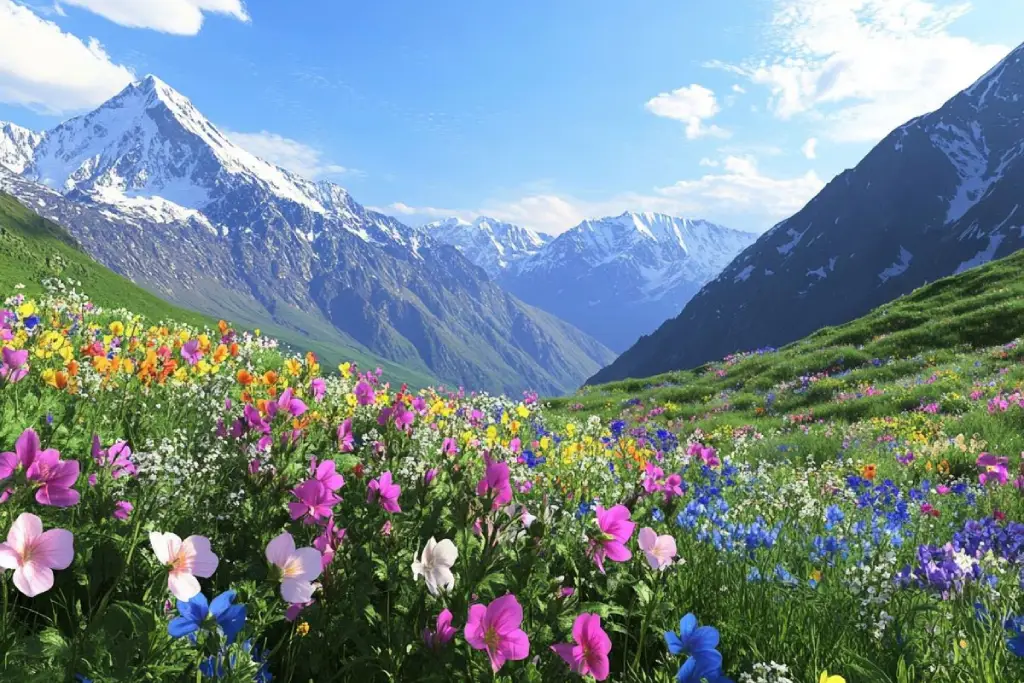
There's no other place in India quite like the Valley of Flowers. Tucked inside the Chamoli district of Uttarakhand, this high-altitude meadow doesn't just bloom — it erupts. Come July and August, over 500 species of wildflowers carpet the valley floor in shades of blue, pink, white, and yellow, with the Pushpawati River threading silently through the middle and snow-streaked peaks framing the edges. It's one of those rare places that actually looks the way it does in photographs — and somehow, even better in person.This is one of the most beginner-friendly Himalayan treks in India. The trail is well-marked, the gradient is gentle, and guesthouse accommodation is available throughout — no camping experience required. Whether you're a first-time trekker, a nature lover, a photographer, or someone who just wants a reason to be in the mountains during monsoon, the Valley of Flowers consistently delivers. The optional climb to Hemkund Sahib — the world's highest Gurudwara at 14,100 ft — adds a memorable spiritual layer if you're up for the extra effort.
Highlights
- Over 500 Species of Wildflowers in One Valley — Blue Poppy, Brahma Kamal, Himalayan Rose, Cobra Lily — the sheer variety is staggering. Botanists and casual walkers alike are left speechless.
- UNESCO World Heritage Site — The Valley of Flowers National Park has held this status since 2005. You're not just trekking — you're walking through a globally recognized natural treasure.
- India's Best Monsoon Trek — Most trails shut down in July–August. This one comes alive. Rain is part of the magic here, not something to avoid.
- Hemkund Sahib at 14,100 ft — The world's highest Gurudwara, perched beside a glacial lake surrounded by seven snow peaks. An add-on day that most trekkers say is unmissable.
- Perfect for First-Timers — No technical climbing, no camping required, well-paved trail, mule support available. A genuine Himalayan experience without the intimidation factor.
Day by day
Route drawn from 6 camp locations in OpenStreetMap over SRTM elevation data. Indicative only — not for navigation.
D1 Rishikesh to Govindghat Drive: ~255–280 km | 10–11 hrs | Altitude: ~1,828 m
D2 Govindghat to Ghangaria via Pulna Drive to Pulna: 4 km | Trek: ~9–10 km | Altitude: ~3,050 m | 5–6 hrs
D3 Ghangaria to Valley of Flowers and Back Trek: ~8 km return | Altitude: ~3,658 m | 6–7 hrs
D4 Ghangaria to Hemkund Sahib and Back Trek: ~12 km return | Altitude: 4,329 m | 7–8 hrs
D5 Ghangaria to Govindghat, Drive to Pipalkoti Trek: ~9–10 km | Drive: ~1 hr | Altitude: ~1,060 m
D6 Pipalkoti to Rishikesh Drive: ~200 km | 9–10 hrs |
What’s included
- Accommodation throughout (guesthouses at Govindghat and Ghangaria, hotel at Pipalkoti)
- All meals during the trek (breakfast, lunch, dinner — vegetarian)
- Experienced, certified trek leader
- Transport: Rishikesh to Rishikesh (pickup and drop)
- National Park entry fee (if mentioned by operator — confirm at booking)
- First aid kit, pulse oximeter, and emergency oxygen cylinder
- Support staff for group logistics
- Emergency evacuation support
- Travel to/from Rishikesh or Dehradun
- National Park entry fee if not included (₹200 for Indians per day)
- Mule/porter charges for personal bags (₹600–₹800 per bag at Ghangaria)
- Personal trekking gear (rain jacket, trekking shoes, poles, etc.)
- Personal medicines and toiletries
- Meals outside of the included itinerary
- Tips for trek staff and guides
- Any personal expenses or snacks
- Anything not mentioned under Cost Includes
Good to know
The Valley of Flowers trek is a 6-day journey covering approximately 38–40 km in total (including the Hemkund Sahib day). It starts from Govindghat (1,828 m) and reaches a maximum altitude of around 4,329 m at Hemkund Sahib, with the valley itself sitting at roughly 3,658 m. The difficulty is easy to moderate — the trail is well-paved for most of its length, the ascent is gradual, and guesthouse stays mean you don't need to carry heavy camping gear. Most people in reasonable health can complete this trek comfortably, making it one of the most accessible high-altitude treks in India. That said, the Hemkund Sahib day is a genuine climb, and decent footwear plus a reasonable fitness level are still required.
The Valley of Flowers is fundamentally a monsoon trek — and that's what makes it unlike anything else in the Himalayan trekking calendar. The park opens around June 1st each year and closes in late October, but the absolute peak bloom period is July through mid-August, when the valley is at its most spectacular. Rain is frequent during this period, but it's also what keeps the flowers alive and the landscape impossibly green. September is a quieter, cleaner alternative — the crowds thin out, the skies clear, and while some flowers are past their peak, the views are sharper and the trails are less muddy. Avoid June if flowers are your primary motivation — the valley is still thawing and the bloom is limited early in the season.
What makes the Valley of Flowers genuinely special — beyond the obvious visual drama — is how it combines things that usually don't coexist in one trek. A UNESCO World Heritage Site. An easy trail that genuine beginners can complete. A monsoon season that works in your favour. A spiritual destination (Hemkund Sahib) that adds real depth to the experience. Over 500 species of wildflowers including rare ones that exist almost nowhere else on earth. And the whole thing done from a guesthouse, so you sleep in a bed each night. It's the rare trek that works for the 22-year-old first-timer and the 55-year-old nature lover equally well — and that kind of range is genuinely hard to find anywhere in the Himalayas.
Questions
Is the Valley of Flowers trek suitable for beginners?
What is the best time to visit the Valley of Flowers?
How much does the Valley of Flowers trek cost in 2025?
Is a permit required for the Valley of Flowers trek?
Can I combine Valley of Flowers with Hemkund Sahib?
Trekker reviews
What the batch said
No reviews yet — write the first one.
Been on this trek? Tell the next batch.
Anyone can write one, with photographs. We read every review before it goes up, so give it a day.