
- Duration
- 5D / 4N
- Max altitude
- 14,100 ft
- Difficulty
- Moderate
- Best months
- Jun, Jul, Aug, Sep
- Starts from
- Manali
- Stay
- Camps
- Group size
- 1-20
Overview
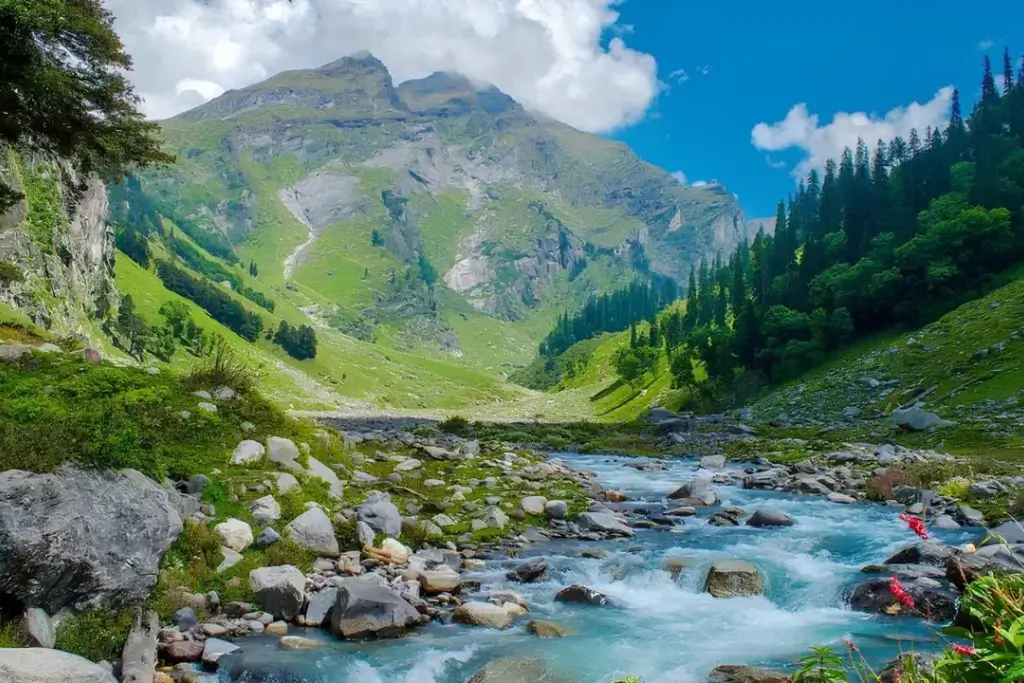
Hampta Pass is the perfect example of a trek that refuses to stay the same. In just five days, you walk from the lush, green Kullu Valley — full of wildflowers, gurgling rivers, and dense forests — and emerge into the stark, moon-like cold desert of Lahaul. The contrast hits you all at once when you're standing at 14,100 feet on the pass itself: look back and it's green and alive; look ahead and it's barren, silent, and endlessly dramatic. That moment alone is worth the entire trek.
Starting from Manali, Hampta Pass is one of the most accessible high-altitude pass crossings in Himachal Pradesh. The trail is rated moderate, making it a solid first proper Himalayan trek for those who've built up some fitness. You don't need prior trekking experience to do this — but you do need a working pair of legs and the spirit to push through. Add a bonus visit to the crescent-shaped Chandratal Lake at the end, and this trek becomes genuinely hard to top.
Highlights
- Two Worlds in Five Days — Walk from the flower-filled Kullu Valley straight into the barren cold desert of Lahaul. The landscape crossover at 14,100 ft is like stepping into another planet.
- Chandratal Lake — the Moon Lake — A crescent-shaped, impossibly blue high-altitude lake at 14,100 ft. It's the kind of place that makes you question if it's real.
- River Crossings with Ropes — Not just a walk in the hills. You'll cross fast-flowing glacial streams with ropes and teamwork — genuinely thrilling moments on the trail.
- Balu Ka Ghera Campsite — Camped in a sandy glacial bowl, surrounded by snow peaks on all sides. Wake up here and you'll understand why people do this.
- Close-Up Views of Deo Tibba & Indrasan — From the pass, these towering Himalayan giants are right in front of you. No zoom required.
Day by day
D1 Manali to Chika via Jobra (Drive + Short Trek)
D2 Chika to Balu Ka Ghera Trek: ~8–9 km
D3 Balu Ka Ghera to Shea Goru via Hampta Pass (Summit Day)
D4 Shea Goru to Chatru, Drive to Chandratal & Back
D5 Chatru to Manali (Drive Back)
What’s included
- Accommodation throughout the trek (tents at all campsites)
- All meals from Day 1 lunch to Day 5 breakfast (vegetarian + eggs)
- Experienced, certified trek leader and support staff
- Porters and mules for kitchen and camp equipment
- Camping gear (tents, sleeping bags, mattresses)
- Forest and trekking permits (including Rohtang/Jobra checkpost permit)
- First aid kit, pulse oximeter, and emergency oxygen cylinder
- Transport: Manali to Manali (Jobra pickup and Chatru drop)
- Microspikes and gaiters (provided by most reputed operators when needed)
- Emergency evacuation support
- Travel to/from Manali
- Personal trekking gear (boots, backpack, trekking poles, rain jacket, etc.)
- Bag offloading charges (if required, ₹300–₹500 per bag per day)
- Personal travel insurance (strongly recommended)
- Any meals outside the trek itinerary
- Personal medicines and toiletries
- Tips for guides and support staff
- Chandratal Lake visit (included with some operators, charged extra by others — confirm at booking)
- Anything not mentioned under Cost Includes
Good to know
Hampta Pass sits at 14,100 feet in the Pir Panjal range of Himachal Pradesh and is rated a moderate difficulty trek — making it one of the most beginner-friendly high-altitude pass crossings in the Indian Himalayas. The total trekking distance is around 26–28 km spread across 4 days of actual walking, with the longest and toughest stretch being the summit day from Balu Ka Ghera to Shea Goru via the pass (approximately 8 km, 8–9 hours). Starting from Manali, the trail passes through Jobra, Chika, Balu Ka Ghera, and Shea Goru before finishing at Chatru, from where most groups visit Chandratal Lake by road. No technical climbing is involved, but the pass crossing demands a steady pace, good hydration, and basic fitness preparation.
The best time to do Hampta Pass is June through September, with each month offering a different experience. June is ideal if you want snow — the pass is often snow-covered and you may get to cross actual snow bridges. July and August bring the monsoon, which turns the Kullu Valley into a riot of wildflowers and greenery — it's actually one of India's best monsoon treks because the Lahaul side stays relatively dry. September is cooler and clearer, with excellent summit-day visibility and fewer crowds. The trek is closed from October to May due to heavy snowfall blocking the pass entirely.
What makes Hampta Pass genuinely stand out is the crossover experience — and not just in a scenic sense. Crossing the pass, you go from one world to a completely different one in the space of a few hundred meters. The contrast between the lush, living Kullu Valley and the silent, barren Lahaul desert is so stark that trekkers consistently describe it as one of the most memorable moments of their hiking lives. Add to that the rope-assisted river crossings, a campsite at the foot of snow peaks (Balu Ka Ghera), and a surreal visit to Chandratal Lake — and you have a trek that punches well above its 5-day weight. For anyone looking to step up from weekend hill walks into real Himalayan trekking, Hampta Pass is the natural, perfect next move.
Questions
Is Hampta Pass trek good for beginners?
What is the best time to visit Hampta Pass?
How much does Hampta Pass trek cost in 2025–26?
Does Hampta Pass trek include Chandratal Lake?
How do I reach the Hampta Pass trek base in Manali?
Trekker reviews
What the batch said
No reviews yet — write the first one.
Been on this trek? Tell the next batch.
Anyone can write one, with photographs. We read every review before it goes up, so give it a day.