TrekVibe — Outdoor Adventure Company
Buran Ghati Trek

Home / Treks / Buran Ghati Trek

Buran Ghati Trek

Moderate–Difficult 8 days / 7 nights Himachal Pradesh 15,000 ft
Duration
8D / 7N
Max altitude
15,000 ft
Difficulty
Moderate–Difficult
Best months
May, Jun, Sep, Oct
Starts from
Shimla
Stay
Guesthouse, Tents
Group size
1-20

Overview

Some treks have one big highlight — Buran Ghati has about ten. Tucked in the Pabbar Valley of Himachal Pradesh, this trek takes you through ancient forests of oak, birch, and pine, opens up into the sweeping Dayara meadows, leads you to a sacred glacial lake, and then asks you to rappel down a near-vertical ice wall at 15,000 feet. No two days feel the same. By the time you reach the orchards of Barua village on the other side of the pass, you'll feel like you've crossed an entirely different world.Rated moderate-to-difficult, Buran Ghati is best suited for trekkers who've already done at least one multi-day Himalayan trek. It's not for absolute beginners — but if you've got some trail miles on your boots and you're craving something that truly tests you, this one delivers. The snow wall descent alone is the stuff of trekking stories that get retold for years.

Highlights

  • The Snow Wall Rappel — In May–June, the Buran Ghati Pass turns into a vertical wall of ice. You don't just cross it — you rappel or slide down it. Nothing else in trekking quite compares.
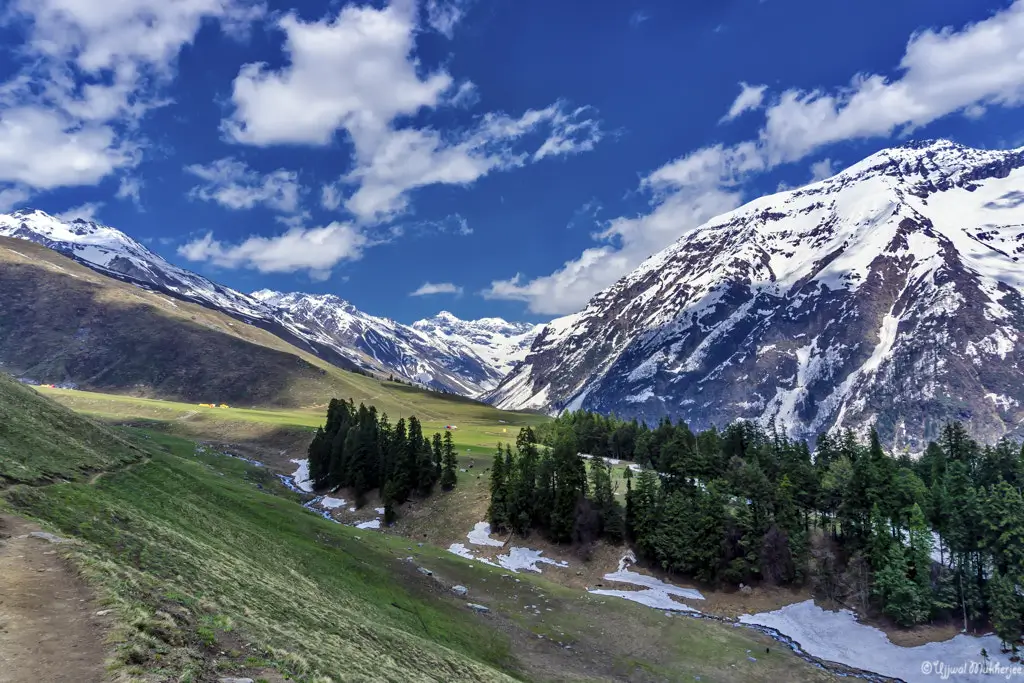
  • Dayara Meadows — An impossibly beautiful stretch of highland meadow with horses grazing freely and snow peaks on every side. Most trekkers stop dead in their tracks when they first see it.
  • Chandranahan Lake — A sacred, semi-frozen glacial lake that the locals believe was created by the gods. It's eerie, serene, and absolutely stunning at 13,900 ft.
  • Two Worlds, One Trail — Start in the lush Pabbar Valley and end in the apple-orchard villages of Kinnaur's Baspa Valley. A genuine crossover that feels like a full journey.
  • Litham Campsite — One of the most dramatic campsites in the Indian Himalayas — set between two valleys, with a river on one side and a waterfall on the other.

Day by day

D1 Arrive in Shimla
Reach Shimla a day before the trek begins. This is your rest and prep day — meet your trek group, pack your gear, and get an early night. Most operators do a briefing here.
D2 Shimla to Janglik (Drive)
Drive: ~160 km | Altitude: ~2,800 m | 9–10 hrsA long but scenic drive from Shimla through Rohru, Chirgaon, and along the Pabbar River to reach Janglik — the last proper village before the wilderness begins. Stay in a local homestay.
D3 Janglik to Dayara Thatch
Trek: ~6–7 km | Altitude: ~3,350 m | 4–5 hrsThe trail kicks off with a climb through thick pine and oak forests before opening dramatically into the vast Dayara meadows. It's a proper jaw-drop moment. Expect to see horses grazing here — and mountains you can't stop photographing.
D4 Dayara Thatch to Litham
Trek: ~4–5 km | Altitude: ~3,600 m | 3–4 hrsA shorter but beautiful day. The trail follows open grasslands and sparkling mountain streams to reach Litham — arguably the most scenic campsite of the entire trek, sitting between the Pabbar River and a waterfall.
D5 Litham to Chandranahan Lake & Back (Acclimatization Day
Trek: ~6 km round trip | Altitude: ~4,240 m | 5–6 hrsToday is the side-trip everyone looks forward to. You hike up to the sacred Chandranahan Lake — the source of the Pabbar River — nestled among snow and rock at high altitude. Return to Litham for camp.
D6 Litham to Dhunda
Trek: ~4–5 km | Altitude: ~4,050 m | 4–5 hrsAscend steadily to Dhunda, your last campsite before the pass. The trail gets rocky and the air gets thinner. This is base camp mode — rest well, eat well, and sleep early. Tomorrow is the big day.
D7 Dhunda to Munirang via Buran Ghati Pass (Summit Day)
Trek: ~8 km | Pass Altitude: 4,572 m (15,000 ft) | 9–10 hrs The one everyone came for. Leave camp before sunrise. You'll climb snowfields, cross the high pass, and then face the famous descent — a steep snow gully that may require ropes. It's technical, thrilling, and unforgettable. Descend to the Munirang river campsite.
D8 Munirang to Barua Village & Drive to Shimla
Trek: ~5 km | Altitude: ~2,010 m | Drive: ~7–8 hrsTrek down through pine forests to the charming Barua village, surrounded by apple, pear, and apricot orchards. Celebrate trek completion, then begin the long drive back to Shimla. Most groups arrive late evening.
D9 Buffer Day / Departure from Shimla
A mandatory buffer built in by most operators for weather delays or emergencies. If not used, you spend the morning in Shimla before heading onward. Plan your return journey from here.

What’s included

  • Accommodation throughout the trek (tents at campsites, homestay in Janglik and Barua)
  • All meals during the trek (vegetarian + eggs)
  • Experienced, certified trek leader and support staff
  • Porters/mules for kitchen and group camping gear
  • Camping equipment (tents, sleeping bags, mattresses)
  • Forest and trekking permits
  • Ropes and basic technical gear for the snow descent
  • First aid kit, pulse oximeter, and emergency oxygen cylinder
  • Transport: Shimla to Shimla (pickup and drop)
  • Emergency evacuation support.
  • Travel to/from Shimla
  • Personal trekking gear (boots, trekking poles, rain gear, backpack, etc.)
  • Bag offloading charges (₹300–₹500 per bag per day)
  • Personal travel insurance (strongly recommended)
  • Any meals outside the trek itinerary
  • Personal medicines, toiletries, and snacks
  • Tips for guides and support staff
  • Anything not mentioned under Cost Includes.

Questions

Is Buran Ghati trek suitable for beginners?
It's not recommended for first-time trekkers. You should have at least one multi-day Himalayan trek under your belt before attempting this. The summit day is 9–10 hours long, involves steep snow terrain, and the pass descent may require a rope — that takes both fitness and basic high-altitude experience to handle safely.
What is the best time to do the Buran Ghati trek?
May–June and September–October are the two ideal windows. Go in May–June for the snow wall experience and lush green meadows. Go in September–October for clear skies, autumn colors, and stable weather. Avoid July–August (heavy monsoon) and November–April (pass remains closed under deep snow).
How much does the Buran Ghati trek cost in 2025–26?
Costs range from ₹12,000 to ₹22,000 per person depending on the operator, group size, and inclusions. Mid-range packages from established companies typically fall between ₹15,000–₹18,000 and include stays, all meals, guide, permits, and safety gear. Travel to Shimla is always extra.
Do I need any special gear for the snow wall descent?
Your operator will provide ropes and basic technical gear for the descent. However, you should carry personal microspikes or crampons (check with your operator), trekking poles, and waterproof gloves. In May–June, gaiters are very useful. A good-quality waterproof jacket and layering system are non-negotiable for summit day.
How do I reach the Buran Ghati trek base camp at Janglik?
Janglik is approximately 160 km from Shimla. The route goes via Rohru and Chirgaon along the Pabbar Valley — a scenic but long 9–10 hour drive. Most operators arrange the Shimla–to–Janglik transfer as part of the package. Plan to arrive in Shimla at least a day before your trek start date.

Trekker reviews

What the batch said

No reviews yet — write the first one.

Been on this trek? Tell the next batch.

Anyone can write one, with photographs. We read every review before it goes up, so give it a day.

Your rating

Your name, review and photographs go on this page once we approve them. Your email does not.