
- Duration
- 6D / 5N
- Max altitude
- 12,150 ft
- Difficulty
- Easy–Moderate
- Best months
- Apr, May, Jun, Sep, Oct, Nov
- Starts from
- Dehradun
- Stay
- Homestay, Tents
- Group size
- 1-20
Overview
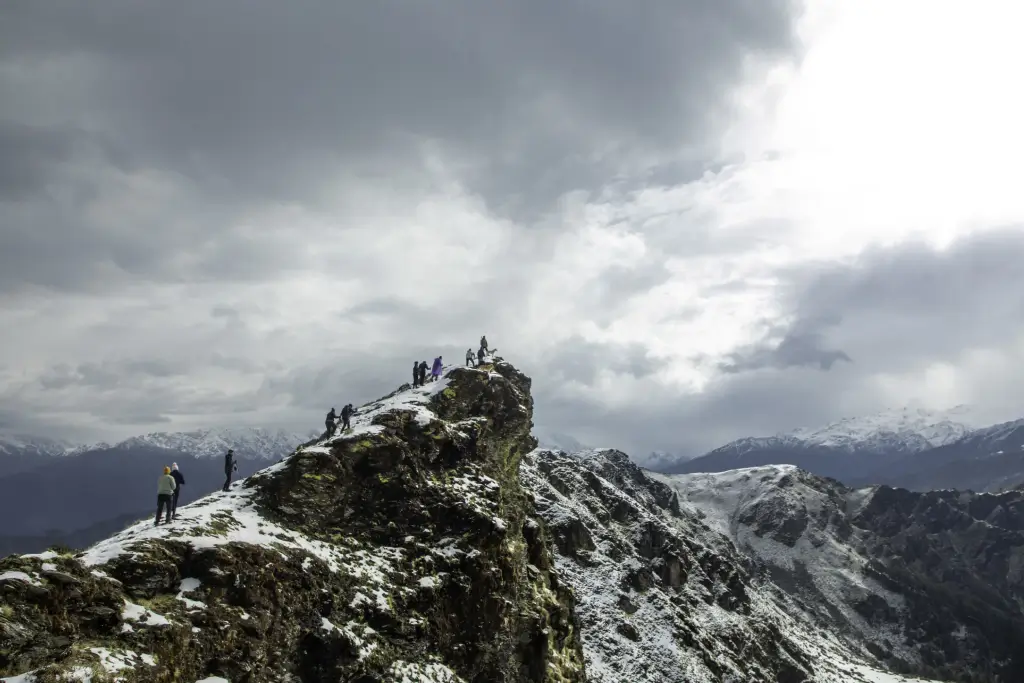
Most Himalayan treks reward you with a view at the top and then ask you to come right back down. Phulara Ridge doesn't work like that. Here, the highlight isn't a single moment — it's an entire day of walking on the spine of a mountain, with deep valleys falling away on both sides and a parade of Garhwal peaks stretching as far as you can see. Named after the wildflowers that carpet it in season, Phulara Ridge sits inside the Govind Pashu Vihar National Park near the trekking hub of Sankri in Uttarakhand. It's the kind of trail that experienced trekkers describe as "quietly addictive" — you keep expecting the views to plateau, and they never do.
At 12,150 feet, this is a moderate trek that's genuinely accessible to beginners with good fitness. The 6-day itinerary (Dehradun to Dehradun) takes you through dense deodar and oak forests, past a serene high-altitude lake, across the famous ridge, and down into the sprawling Pushtara meadows. If you're looking for your first real Himalayan ridge experience — or simply want a trek that delivers variety, beauty, and that clean mountain silence all at once — Phulara Ridge belongs on your list.
Highlights
- India's Best Day-Long Ridge Walk — Most treks give you a ridge section that lasts 30 minutes. Phulara gives you hours on the crest, with 360° views of peaks like Swargarohini, Bandarpoonch, Kalanag, and Kedarkantha walking alongside you the entire time.
- Pushtara Meadows — A Green Carpet in the Sky — After the ridge, the trail descends into the vast Pushtara meadows. Wildflowers, rolling grasslands, and mountain silence. It's the kind of campsite that makes you want to stay one more night.
- The Himalayan Monal on Your Trail — Phulara Ridge is one of the best treks in Uttarakhand for spotting the Himalayan Monal — India's most colorful pheasant. Early mornings on the ridge, keep your eyes open.
- Juda Ka Talab — A Forest Lake With a View — A serene, mirror-still lake tucked inside a dense forest, with snowy peaks peeking through the treeline. It's your first campsite and already a highlight on its own.
- Offbeat & Crowd-Free — Despite being discovered a few years ago, Phulara Ridge still sees far fewer trekkers than Kedarkantha or Har Ki Dun. Go before that changes.
Day by day
D1 Dehradun to Sankri (Drive)
D2 Sankri to Sikolta
D3 Sikolta to Bhoj Gadi
D4 Bhoj Gadi to Pushtara via Phulara Ridge
D5 Pushtara to Taluka, Drive to Sankri
D6 Sankri to Dehradun (Drive)
What’s included
- Accommodation throughout (guesthouse at Sankri on Days 1 and 5, twin-sharing tents on the trail)
- All meals from dinner on Day 1 to breakfast on Day 6
- Experienced, certified trek leader
- Local support staff and pack animals for kitchen and camping equipment
- Camping gear (tents, sleeping bags, foam mattresses)
- Govind Pashu Vihar National Park forest permit
- First aid kit, pulse oximeter, and emergency oxygen cylinder
- Transport: Dehradun to Dehradun (pickup and drop from Dehradun railway station)
- Emergency evacuation support
- Travel to/from Dehradun
- Personal trekking gear (trekking shoes, backpack, trekking poles, warm layers, etc.)
- Rucksack offloading charges (~₹2,400 for entire trek duration)
- Personal travel insurance (recommended)
- Any meals outside the trek itinerary (cafes/dhabas en route)
- Personal medicines and toiletries
- Tips for guides and support staff
- Anything not mentioned under Cost Includes
Good to know
Phulara Ridge Trek is a 6-day moderate trek covering approximately 30 km, starting and ending in Dehradun with the base at Sankri village (1,950 m) in the Uttarkashi district of Uttarakhand. The trail runs entirely within Govind Pashu Vihar National Park, following the route: Sankri → Sikolta → Bhoj Gadi → Phulara Ridge → Pushtara → Taluka → Sankri. The highest point is the Phulara Ridge at 12,150 ft (3,700 m), reached on Day 4. Difficulty is rated moderate — the ascents are gradual and manageable for beginners with a decent fitness base, though the ridge day is long and requires stamina. Anyone who can sustain 5–6 hours of walking across consecutive days and carry a 10 kg pack will find this achievable. Prior Himalayan trekking experience is helpful but not mandatory.The best time to do the Phulara Ridge Trek is May to mid-June and mid-September to October. The May–June window brings the wildflowers in full bloom — Brahmakamal, rhododendrons, and countless unnamed species turning the trail into something out of a nature documentary. Post-monsoon September and October offer the clearest mountain views, crisp air, and the meadows in their golden autumn form. Avoid July and August — the monsoon makes the forest trails slippery and the ridge itself can be dangerous in wet conditions. The trek is also not recommended from November to April, as heavy snowfall blocks the ridge route.What separates Phulara Ridge from nearly every other moderate trek in India is the ridge walk itself. In most Himalayan treks, the ridge is a passing moment — a brief high point before you start coming down. Here, it's the centerpiece. You spend several hours walking along the actual crest, with the land dropping away into deep valleys on both sides and a near-complete sweep of Garhwal's most iconic peaks around you. It's not technically demanding — the ridge is walkable and the trail is clear — but experientially, it's unlike anything else in the accessible Himalayan trekking world. Add to this the variety of the full trail: a forest lake, dense deodar woods, a wildflower-strewn meadow campsite at Bhoj Gadi, and the spacious Pushtara meadows at the end — and you have a trek that punches well above its moderate grade.
Questions
Is the Phulara Ridge Trek suitable for beginners?
What is the best time to do the Phulara Ridge Trek?
How do I reach the Phulara Ridge Trek base at Sankri?
Is a forest permit required for the Phulara Ridge Trek?
What makes Phulara Ridge different from Kedarkantha or Har Ki Dun?
Trekker reviews
What the batch said
No reviews yet — write the first one.
Been on this trek? Tell the next batch.
Anyone can write one, with photographs. We read every review before it goes up, so give it a day.